
From Arid Ground to Thriving Classroom: The Mapunga High School Agro STEM Project
By Enock Nthiwa Kaunda, Project Lead Teacher & KCCP Participant.
Mapunga High School, Tana River County, Kenya.
Abstract
In Kenya’s drought-prone Tana River County, where educational resources are often scarce and food security is a constant challenge, Mapunga High School has pioneered an innovative solution that addresses both issues simultaneously. The Mapunga Agro-STEM Project transforms a once-barren school plot into a living laboratory, where agriculture meets rigorous Science, Technology, Engineering, and Mathematics (STEM) education. This student-led initiative not only strengthens our school feeding programme with fresh, sustainable produce but also provides an unparalleled, context-relevant outdoor learning space. This article details the project’s conception, its integrated STEM curriculum, tangible outcomes, and its role as a model for resilient, community-embedded education in arid regions.
- Introduction: Education Rooted in Context.
Tana River County is characterized by its harsh, semi-arid climate, where communities have long grappled with the cyclical threats of drought and food insecurity. At Mapunga High School, we recognized that these environmental challenges were not just obstacles but powerful, untapped contexts for learning. The question became: How could we make education more relevant, practical, and impactful for our students while directly contributing to their well-being?
The answer was born from a convergence of opportunity and training. Following participation in the Knowledge Co-Creation Programme (KCCP) organized by Directorate of National Science Centre (DNSC), Zambia in conjuction with JICA, which emphasises more on hands-on, competency-based STEM teaching, a clear vision emerged: to establish a school-based Agricultural Club that would double as a comprehensive Agro-STEM learning project. Our goal was to move STEM from the abstract pages of a textbook into the tangible, sun-baked soil of our school compound.
- Project Genesis: From Concept to Green Reality.
The project began with a formal proposal and a decisive meeting with the School’s Principal, Madam Leila Masjid. Recognising the dual academic and nutritional value, the Principal allocated a dedicated plot of land within the School compound for the initiative. This administrative endorsement was crucial, providing the legitimacy and space needed to begin.
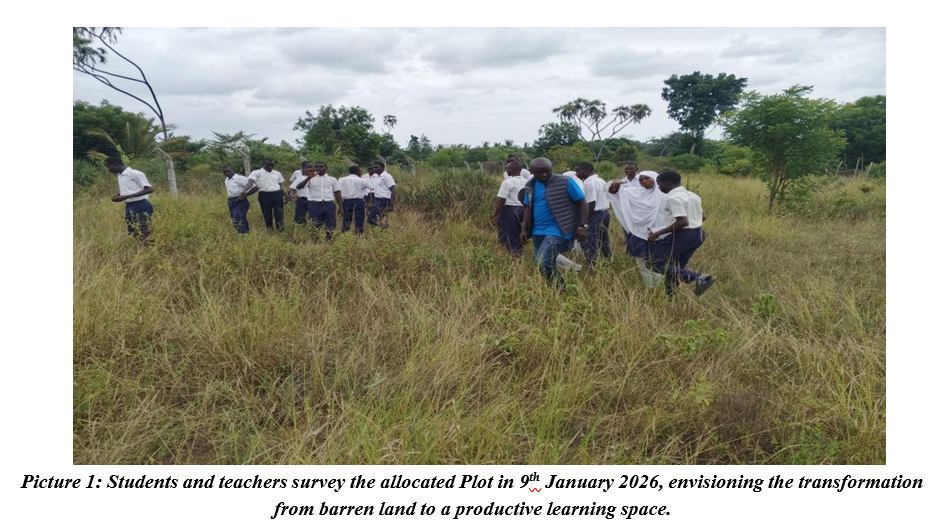
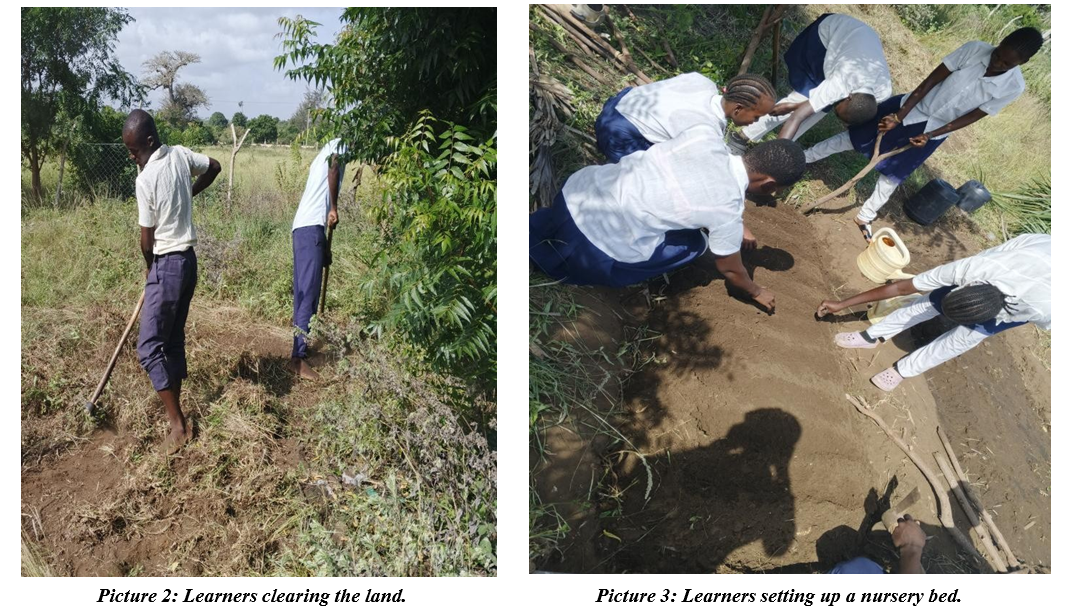
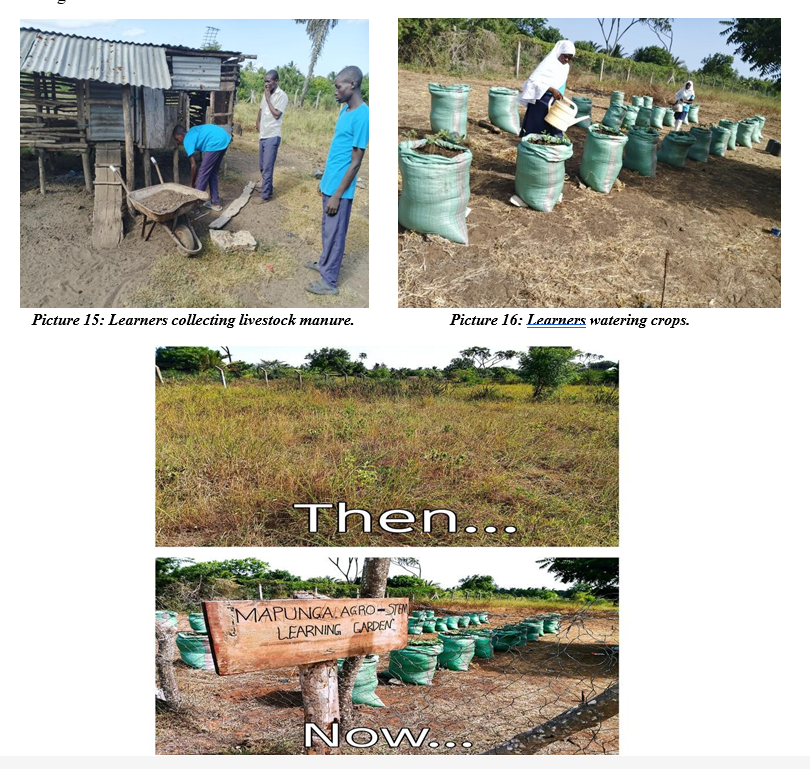
The first phase involved the entire school community. Students, equipped with hoes and rakes, led the clearing of the land. We applied the STEM principles from the outset; students calculated the area and perimeter of the plot (Mathematics), discussed soil composition and water retention (Chemistry & Environmental Science), and designed the layout for optimal sun exposure and wind protection (Physics & Design).
- The Agro-STEM Model: A Living, Interdisciplinary Curriculum.
The core innovation of the project is its seamless integration of standard curriculum subjects into every agricultural activity. The garden is not an extra-curricular hobby; it is a primary classroom.
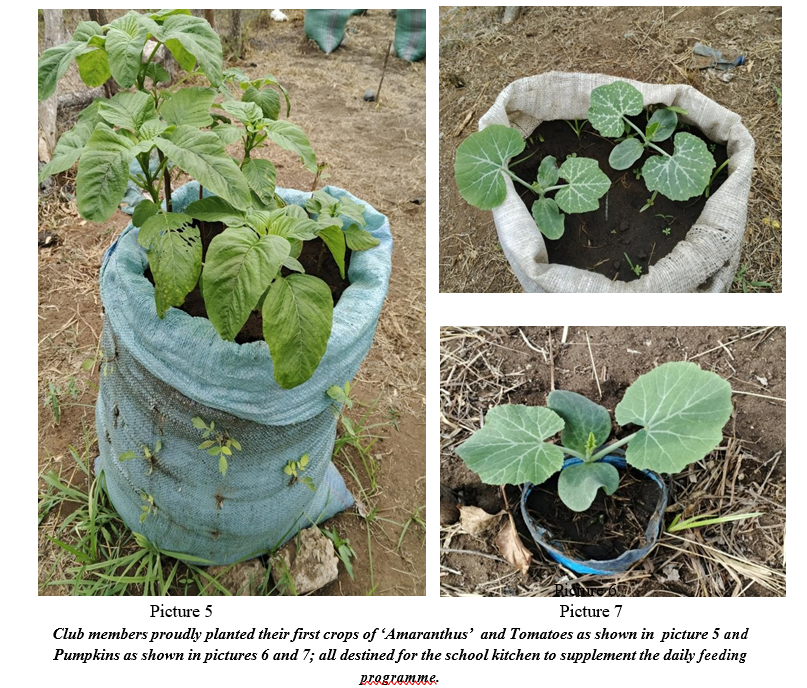
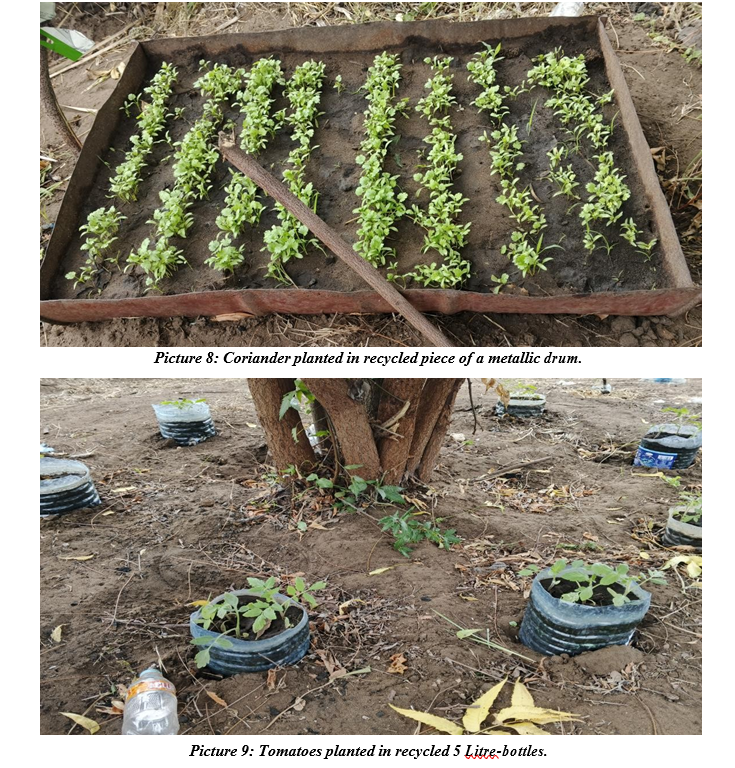
- Biology in Action: Students study plant physiology through the germination and growth cycles of drought-resistant crops like coriander, pumpkins, Amaranthus and kales. They monitor root development, photosynthesis, and the impact of organic compost they produce themselves from school waste.
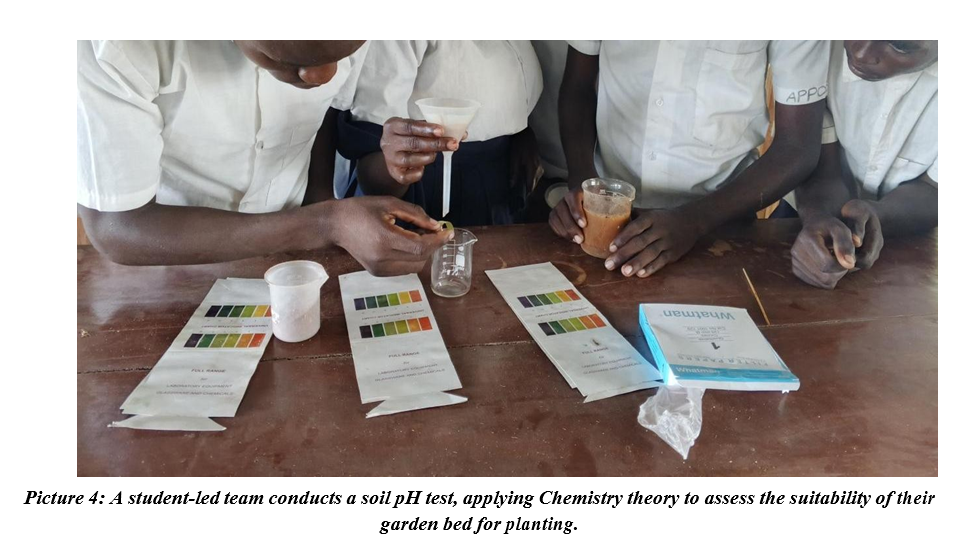
- Chemistry at Work: Lessons on soil chemistry come alive as students test soil pH, monitor nutrient levels, and understand the science behind organic manure. The process of creating compost becomes a lesson in decomposition and biochemistry.
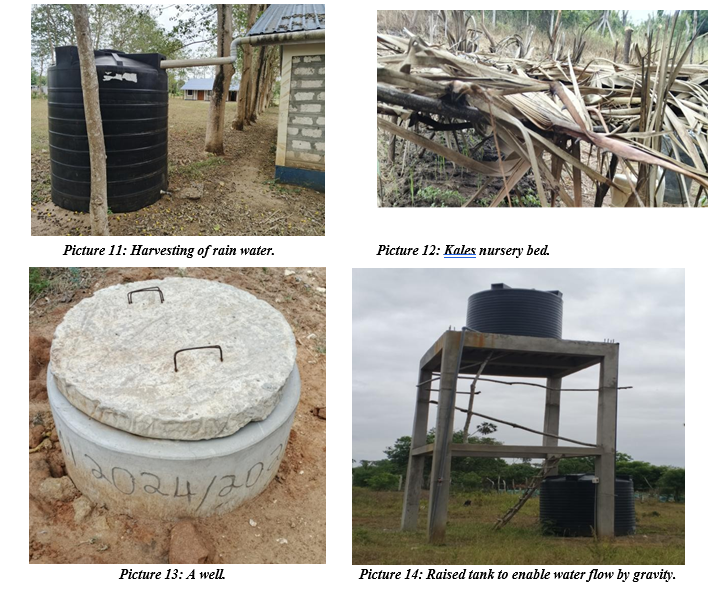
- Physics Principles Applied: Designing and building a simple drip irrigation system from recycled bottles teaches principles of pressure, gravity, and water conservation; a critical skill in our arid region. The study of light and heat informs the positioning of nursery beds.
- Mathematics for Real-World Problem Solving: Students constantly engage in calculations: tracking growth data, calculating harvest yields, and managing the project’s simple budget and resource allocation.
- Dual Impact: Feeding Minds and Bodies.
The project delivers impact on two fundamental levels:
-
- Enhancing STEM Competency and Engagement.
Student engagement in science and mathematics has noticeably increased. Teachers report that abstract concepts are now grasped more quickly because students have a real-world reference. The project fosters critical 21st-century skills: problem-solving, teamwork, data literacy, and innovative thinking.
-
- Boosting the School Feeding Programme.
This is the project’s most direct community benefit. Harvests of leafy vegetables will be regularly supplied to the school kitchen. This not only improves the nutritional quality of meals for over 150 students but also provides a profound sense of accomplishment and agency for the learners, who see the direct fruits of their labour sustaining their peers.
- Sustainability and Community Roots.
Sustainability is woven into the project’s fabric. We use locally available materials like sacks and recycled bottles, recycle organic waste into compost, dug well and harvest rainwater. The student leadership structure within the Agricultural Club ensures knowledge and responsibility are passed down to younger students each year. Furthermore, the project has sparked interest beyond our gates; parents and local agricultural officers have visited, and we have begun sharing our model with neighbouring schools.
The project’s resilience was tested during this January dry season. Instead of a setback, it has become a powerful lesson. Students researched and implemented mulching techniques, turning a climatic challenge into a hands-on experiment in adaptation and resilience.
- Conclusion: A Replicable Model for Arid Regions.
The Mapunga High School Agro-STEM Project demonstrates that the challenges of arid and semi-arid lands can be the very catalyst for educational innovation. It proves that STEM education can be deeply contextual, immediately relevant, and directly beneficial to student welfare. We have moved beyond theory to create a system where learning cultivates food, and growing food deepens learning.
We believe this model is highly replicable for schools across Africa facing similar environmental and resource constraints. It requires not vast resources, but a shift in perspective: seeing the school compound as a potential farm, the curriculum as a guide for practical action, and students as capable agents of change in their own communities.
For more information about this initiative, please contact: Enock Nthiwa Kaunda,
Email: enockaunda@gmail.com
About the Author: Enock Nthiwa Kaunda is a passionate Physics and Mathematics teacher at Mapunga High School, Tana River county, Kenya and a Knowledge Co-Creation Programme (KCCP) participant. He champions contextual, project-based learning as a tool for student empowerment and community development.