
From Classroom to Community: How Learners at Ndejje Senior Secondary School Built a Digital Solution for Small-Scale Farming
Author: Ogwal Isaac
Head of Department, ICT
Ndejje Senior Secondary School, Uganda
Ogwalisaac291@gmail.com
Background
At Ndejje Senior Secondary School, learner innovation has increasingly moved beyond classroom exercises to address real challenges within the school and surrounding community. One such example is the Farm-Based Management System (FBMS) a learner-led STEM initiative developed by Senior Three (S3) students as part of their ICT learning experience.
The FBMS project did not emerge in isolation. It was inspired by an earlier student innovation the Sickbay Management System which was developed by a different student team, formally adopted by the school, and recognised for its contribution to improving school health record management. That earlier success helped create a culture of possibility within the school, demonstrating to learners that their ideas could lead to real, usable solutions. In turn, it sparked a healthy, competitive environment that has since seen new projects such as FBMS and PulsePoint begin to take shape.
Identifying a real-world STEM problem
The idea for FBMS emerged from learners’ everyday experiences beyond the school environment. Many of the students come from farming households and were familiar with challenges such as poor record keeping, limited access to crop and animal health information, and difficulties connecting to reliable markets. These were not abstract problems discussed during lessons, but realities observed at home and in their communities.
Motivated by the example set by the Sickbay Management System team, the learners began asking whether the ICT skills they were learning could be applied to address these farming challenges. With teacher guidance but without being given predefined solutions, the learners identified the problem space themselves and proposed developing a digital system tailored to small-scale farmers.
Building the Farm-Based Management System
Working collaboratively, the learners designed and developed FBMS as a digital prototype intended for real-world use. The system evolved through iterative cycles of design, testing, feedback, and refinement – mirroring authentic STEM and software development processes.
FBMS eventually comprised four interrelated components:
- A farm record tracking module,
- An animal health information module,
- A crop health module (CropConfig), and
- A marketplace interface (FarmConnect)
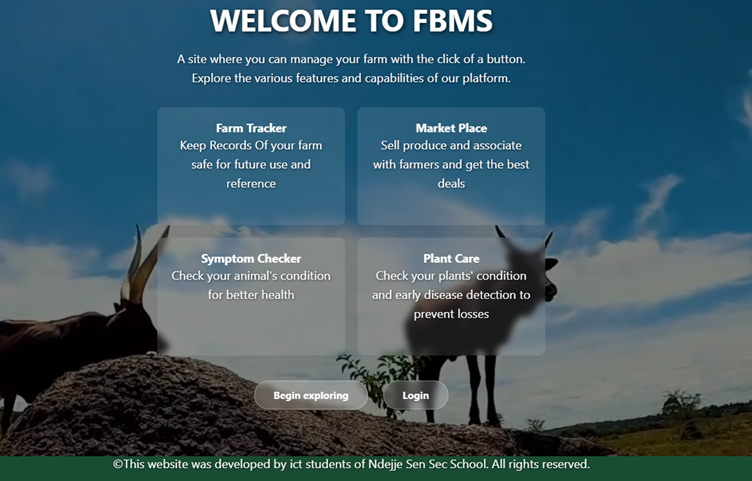
Figure 1: The FBMS user interface, showing core features for farm record tracking, animal and crop health monitoring, and access to a digital marketplace
Each component underwent multiple revisions as learners adjusted system features based on functionality, usability, and imagined user needs. This process helped learners develop systems thinking, as they began to understand how technical decisions affect usability and real-world application. Watch a demo video of the system during its development.
Learning through collaboration and iteration
Collaboration was a defining feature of the FBMS development process. All learners involved contributed meaningfully to at least one system component, and many participated across several development stages. Peer discussions, shared problem-solving, and continuous feedback supported both skill development and sustained engagement.
The project also benefited from the broader innovation culture at Ndejje Senior Secondary School. The success of the Sickbay Management System had already demonstrated that learner-built solutions could be taken seriously and implemented at school level. This encouraged FBMS learners to aim beyond task completion and to think critically about quality, relevance, and potential deployment.
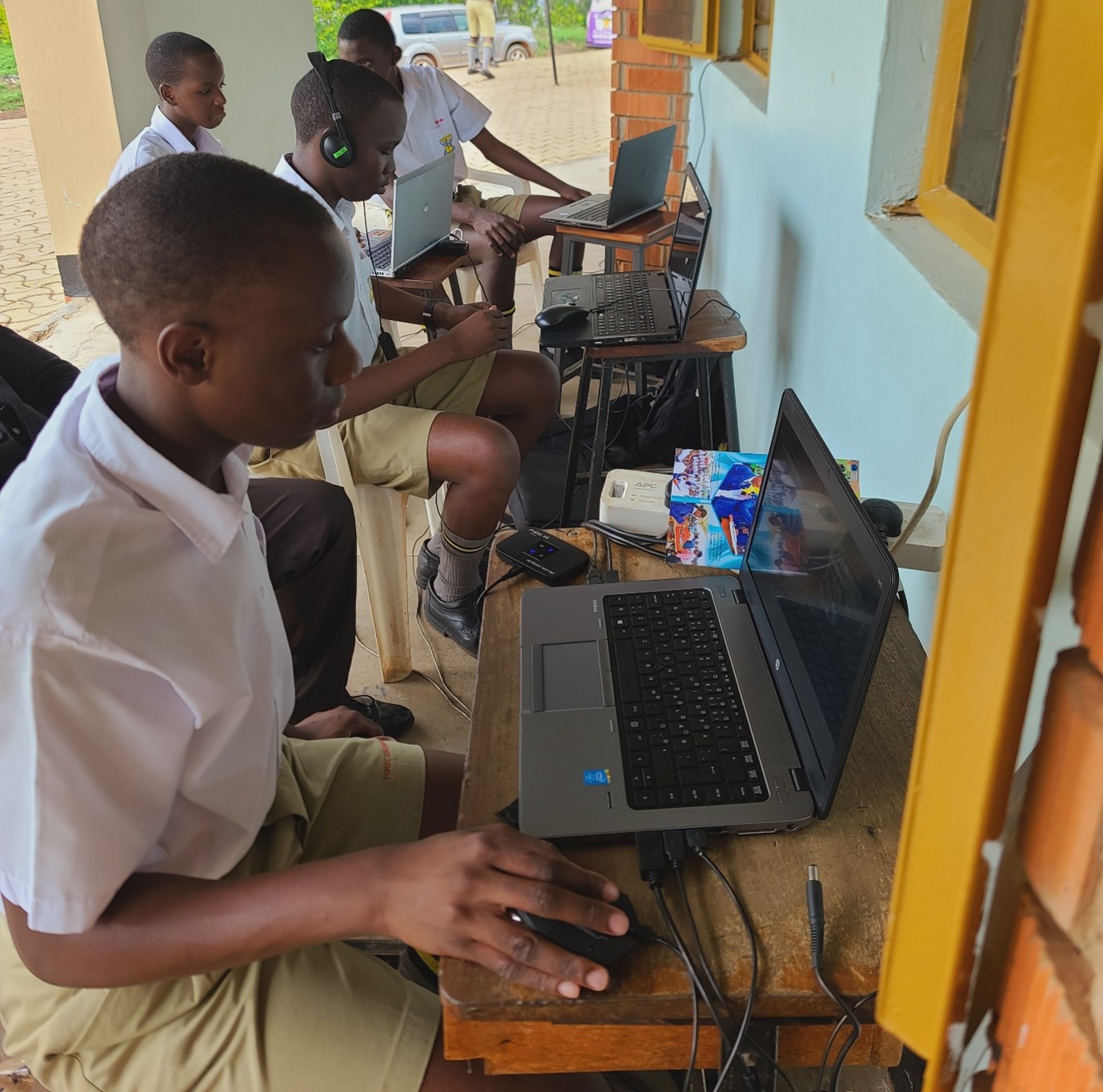
Figure 2 As learners worked on FBMS, development sessions became spaces for critical thinking about system quality, relevance, and potential deployment beyond the classroom
Thinking beyond the classroom
As development progressed, learners increasingly considered how FBMS could be used outside the school environment. Many prioritised ease of use, recognising that community farmers would require simple, accessible interfaces. Some learners also discussed the potential for adoption within their communities and explored early ideas around sustainability and possible future sale.
At the same time, learners demonstrated realistic self-assessment. They identified constraints such as limited time within the school timetable, competing academic demands, restricted access to real user data, infrastructural challenges, and limited experience with business modelling and regulatory considerations. These reflections highlighted an important learning outcome: innovation involves not only technical creativity, but also contextual, ethical, and practical judgement.
Why this matters for STEM Education in Africa
The FBMS experience at Ndejje Senior Secondary School illustrates how learner-led STEM initiatives can emerge organically when schools create space for agency, mentorship, and continuity. Rather than being isolated projects, innovations build on one another – each success inspiring the next.
For educators across Africa, this story demonstrates that impactful STEM learning can grow from within schools, driven by learners who are trusted to identify problems they understand and supported to develop solutions that matter. When schools recognise and nurture such initiatives, STEM education becomes not just about learning concepts, but about applying them meaningfully to improve real lives.
A reflection worth considering
The Farm-Based Management System (FBMS) began as an idea sparked by learners observing real challenges in their communities and inspired by peers who had already shown what was possible. It has since grown into a functional digital prototype shaped by collaboration, iteration, and reflection, and it continues to undergo revision as students refine the system within an enabling learning environment that supports ongoing improvement.
As African schools seek to strengthen STEM education, a reflective question remains:
What new forms of innovation might emerge if learner ideas are not only encouraged, but recognised and supported as part of a school’s learning culture?
Author
Author: Ogwal Isaac
Head of Department, ICT
Ndejje Senior Secondary School, Uganda
Ogwalisaac291@gmail.com