COMSTEDA 22: Africa Reimagines STEM Education for Continental Transformation
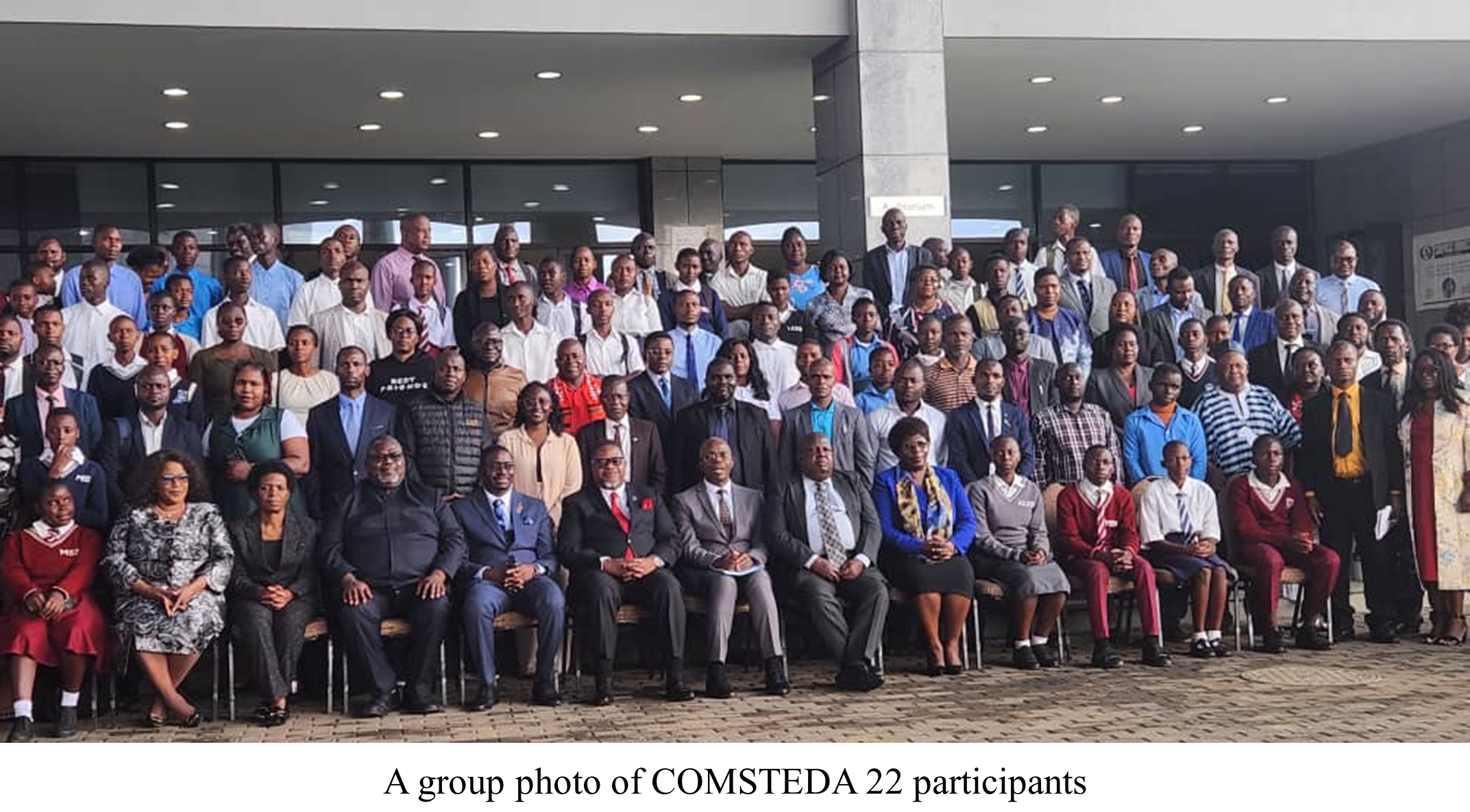
The 22nd Conference on Mathematics, Science and Technology Education in Africa (COMSTEDA 22) concluded successfully in Lilongwe, Malawi. The conference was hosted by the Ministry of Education, Science and Technology of Malawi in collaboration with the Strengthening of Mathematics and Science Education in Africa (SMASE-Africa) Association. The three-day event was held from November 12-14, 2025 at the Bingu International Conference Centre. The conference brought together education stakeholders from 18 African countries and beyond, under the theme: “Reimagining STEM for a Pan-African Future: Bridging Education, Innovation, and Sustainable Development Towards Agenda 2063”. One hundred and fourty six (146) presentations were made at the conference.
From Technology Consumers to Innovators
Malawi’s Minister of Education, Science and Technology, Honourable Bright Msaka, delivered a powerful message at the opening ceremony, urging African states to shift from being consumers of imported technologies to producers of their own innovations through practical and relevant science teaching.
“We must move away from teaching mundane subjects like dissecting a frog to opening up a mobile phone and seeing how it functions. Science and technology education must address Africa’s needs today and tomorrow,” said Minister Msaka.
He emphasized that despite progress in promoting STEM learning, Africa remains heavily dependent on foreign-made technologies, a situation that limits industrial growth and innovation on the continent.
“If you look around your home, very few gadgets are designed or made on this continent. That must change. We would like to see a television made in Zambia or a mobile phone made in Mozambique,” the Minister added.
Decolonizing STEM Education for African Solutions
The conference strongly advocated for the decolonization of STEM education, urging African governments to prioritize skills that help solve real-life challenges and drive socio-economic transformation in line with Agenda 2063, the African Union’s vision for a self-reliant and industrialized continent.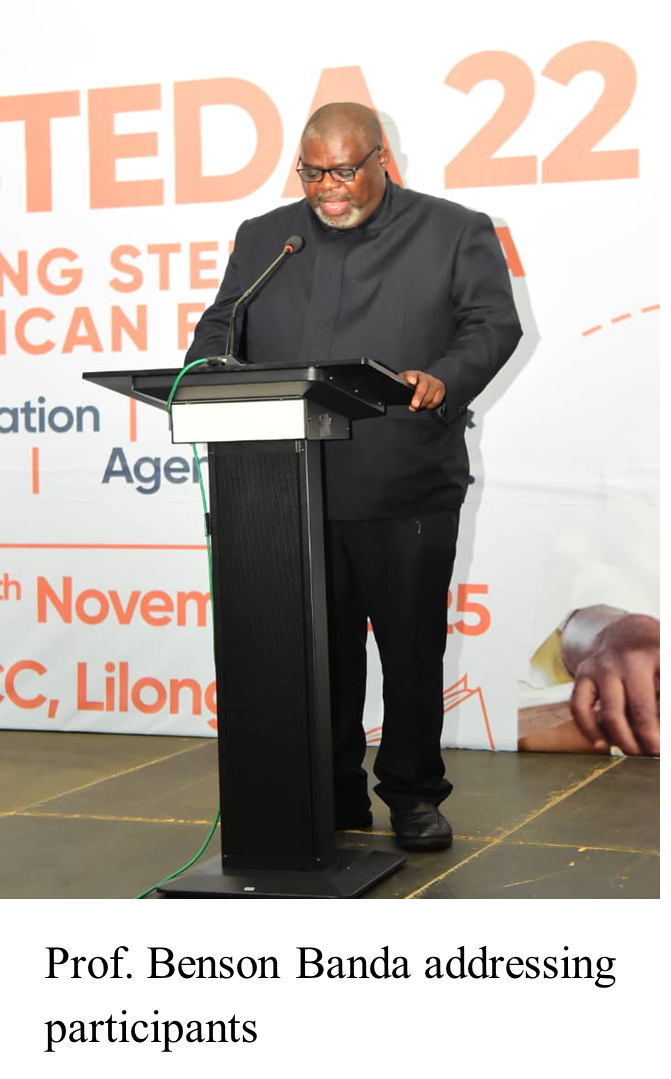
Professor Benson Banda, Director of Zambia’s National Science Centre and President of SMASE-Africa, commended Malawi for hosting what he described as a “progressive and inclusive” gathering. “Africa must not only develop technology, it must invent it. Through innovation and collaboration, we will build the Africa we want,” Professor Banda declared.
The conference emphasized that African scientists are increasingly producing world-class research and innovations, but stronger policy and institutional support are needed to help scale up their work and translate research into practical applications.
Record Participation and Research Excellence
COMSTEDA 22 saw exceptional participation, with 146 presentations being made at the conference. These papers, presented by delegates from across Africa and international partners, addressed critical issues in STEM education from early learning to tertiary levels, offering homegrown solutions to African challenges.
The conference featured a keynote address by Associate Professor Lisnet Mwadzaangati from the University of Malawi, a distinguished mathematics education researcher whose work spans geometric reasoning, teacher professional development, and gender equity in mathematics education. Her insights set the tone for three days of rigorous academic exchange and innovative thinking.
Five Critical Strands Shaping Africa’s STEM Future
Discussions were organized around five sub-themes:
- Decolonizing STEM Curricula focused on integrating African knowledge systems and sustainable practices to make education culturally relevant and empowering for African learners, moving beyond colonial-era teaching methods.
- Pan-African Innovation Hubs explored leveraging technology and entrepreneurship to address continental challenges such as food security and healthcare while nurturing youth-led startups and digital transformation.
- Gender Equity in STEM addressed systemic barriers preventing women and girls from fully participating in STEM fields, with discussions on policy reforms, mentorship programs, and inclusive pedagogies.
- STEM for Climate Resilience examined how STEM education and innovation can develop climate-smart agriculture, renewable energy systems, and disaster-resilient infrastructure crucial for Africa’s environmental sustainability.
- Policy Harmonization and Cross-Border Collaboration focused on creating continental frameworks for aligning national STEM policies, funding mechanisms, and research priorities to accelerate regional integration and prosperity.
Empowering Young Women in STEM
The conference highlighted the critical importance of encouraging girls to pursue science subjects. Among the young participants was Jasmine Osman, a student at Jalira Girls Secondary School in Rumphi, who said the event deepened her passion for science. “Here I’ve been taught the process of the excretory system, and seeing a real diagram helped me understand it better than before,” said Osman. “Girls should also pursue science subjects because in our society they are often seen as having less power and intelligence. By taking science, we can prove that wrong and inspire other girls to follow.” Her sentiments echoed the conference’s strong emphasis on breaking down gender barriers in STEM fields and empowering women and girls as leaders in Africa’s sustainable future.
Practical Learning Through Educational Site Visits
A unique feature of COMSTEDA 22 was the organized site visits to Nalikule College of Education and Mlodza Secondary School, where delegates observed firsthand innovative STEM teaching practices and educational exhibitions. These practical sessions provided tangible examples of how African educators are making science education more hands-on, relevant, and transformative, moving away from purely theoretical approaches to experiential learning that addresses real-world challenges.
Competence-Based Education for Real-World Impact
The conference emphasized the critical role of competence-based curricula over rote memorization, aligning with ongoing education reforms across the continent. Malawi’s Secretary for Education, Dr. Ken Ndala, stressed the importance of equipping learners not just with knowledge but with skills directly applicable to real-life situations. “Our learners must be equipped not only with knowledge but also with the competences required to thrive in an ever-changing world,” education officials emphasized, calling on teachers as frontline ambassadors to translate conference learnings into classroom action and transform classrooms into spaces where learners discover, create, and solve problems.
Closing Communique: Building the Africa We Want
During the closing ceremony, delegates adopted the COMSTEDA 22 communique, that will inform educational practices and policy reforms across member countries, contributing to the realization of Agenda 2063’s vision of a prosperous, integrated, and sustainable Africa.
In the closing remarks, SMASE-Africa leadership expressed gratitude to the Government of Malawi for the exceptional hospitality and seamless organization that made the conference a resounding success, noting that Malawi has indeed lived up to its reputation as the Warm Heart of Africa. The Ministry of Education, Ethiopia, announced that it will host COMSTEDA 23 in 2026, marking another milestone in the continental rotation of this important gathering.
Watch the news on COMSTEDA 22 using the link below
https://drive.google.com/file/d/1NJ5N0R37r1DyE9xu8uMVA-RxR_ejf3Gx/view?usp=sharing